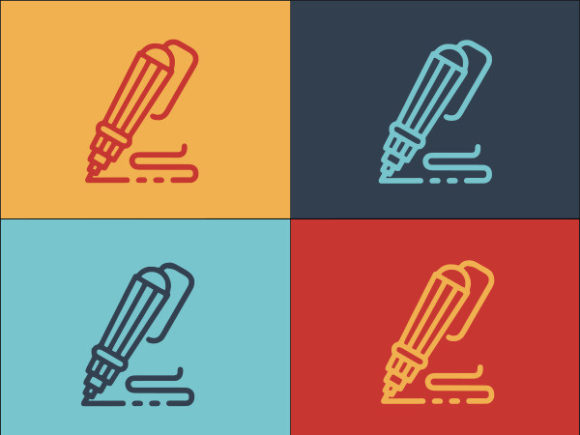
3d Design Pen Review: Graphics and Logos for Modern Branding
I recently received a brief from a client launching a boutique stationery line called "Ink & Flow." They wanted a brand identity that felt premium, artistic, and tactile. The challenge was to create a logo design that didn’t just sit flat on the page but suggested the physical act of writing, drawing, or crafting. That is when I pulled up the 3d Design Pen asset to see if it could serve as the anchor for their visual direction. As a designer who deals with everything from packaging design to social media graphics, I am always skeptical of pre-made assets. However, after testing this file in a real-world context, I found it to be a surprisingly robust tool for specific creative niches.
First Impressions: Elegance Meets Utility
The moment I opened the file, the quality was evident. The logo template is very elegant, modern, versatile and stylish design. It immediately established a mood of sophistication without being overly ornate. The 3D effect isn’t heavy-handed; instead, it uses subtle shading and depth to give the pen element a tangible presence. This is crucial for a handmade business or a small business branding project where you want to convey craftsmanship.
What struck me most was its versatility. Unlike many graphic design asset libraries that feel dated or overly trendy, this one feels timeless enough for a corporate brand identity yet playful enough for a creative marketplace listing. It bridges the gap between serious professional tools and fun, accessible creativity. For my client, this meant we could use the same core graphic for a high-end business card and a casual Instagram post, maintaining visual hierarchy and consistency across platforms.
Real-World Application: From Print to Digital
In my workflow, I rarely use an asset exactly as provided. I deconstruct it. Here is how the 3d Design Pen performed when I tested it across various mediums relevant to today’s digital sellers and print-on-demand entrepreneurs.
Packaging and Product Labels
This is where the asset truly shines. When placed on a matte black box or a kraft paper label, the 3D rendering catches the eye. It works beautifully as a decorative accent on product mockups. I used it as a central element for a set of wax seal stickers and product tags. Because the design is clean, it allows the typography around it to remain legible. It supports the narrative of "quality tools" without overpowering the actual product information. For anyone selling sublimation design files or physical crafts, this adds a layer of perceived value that flat vector shapes often lack.
Social Media and Editorial Design
For marketing visuals, particularly for Pinterest pins and Instagram posts, the depth of the pen creates natural focal points. I experimented with placing the pen over soft gradients and textured backgrounds. The asset held up well, providing a clear subject for editorial design layouts. It helped guide the viewer’s eye toward the call-to-action text. In a crowded feed, that extra dimension can be the difference between a scroll-past and a click-through.
Merchandise and T-Shirt Design
I also tested the asset for t-shirt design and mug printing. While 3D effects can sometimes look muddy in sublimation due to color limitations, the clean lines of this design translated well. It worked best when simplified—removing some of the finer shadow details to ensure crisp edges on fabric. It serves as an excellent base for a sticker design or a decal for laptops and water bottles, appealing to students, artists, and professionals alike.
Where to Use (and Where to Pause)
No single asset fits every scenario. Based on my testing, here is where the 3d Design Pen thrives and where it requires caution.
- Large Layout Areas: It performs exceptionally well in hero graphics, website headers, and large poster prints where the details of the 3D effect can be appreciated.
- Themed Collections: It is perfect for back-to-school campaigns, office supply promotions, or artist portfolio branding.
- Small Sizes: Be careful here. At favicon size or small app icons, the 3D depth may flatten out or become indistinct. Always test at 16x16 or 32x32 pixels.
- Crowded Layouts: If your design already has complex patterns or heavy typography, adding this asset might create visual noise. It needs breathing room to work effectively.
- Minimalist Branding: If your client prefers ultra-minimal, flat-line aesthetics, this asset might feel too busy. It suits modern, slightly bold styles better than strict minimalism.
Technical Inspection and Designer Notes
Before committing to any commercial license purchase, I always perform a technical audit. Here is what you need to check with the 3d Design Pen.
- File Formats: The package includes SVG, which is non-negotiable for professional work. Being compatible with Inkscape, Gravit Designer, Adobe Photoshop, and other major tools ensures flexibility. I recommend opening the SVG in a vector editor to inspect the layers. Are the gradients editable? Can you separate the shadow from the main body?
- Contrast and Readability: I always convert the asset to pure black and white to check its silhouette. Does it still read as a pen? Yes. I also tested it on light and dark backgrounds. On dark modes, ensure the highlights are bright enough to pop. On light modes, verify the shadows provide enough contrast against white space.
- Typography Pairing: The asset has a distinct style. I paired it with a clean sans-serif font for a tech-forward look and a sophisticated serif font for a luxury stationery vibe. Avoid pairing it with handwritten fonts unless you are going for a very specific "sketchbook" aesthetic, as it can clash with the polished 3D render.
- Print Quality: If you are using this for print-on-demand or physical product mockups, ensure the resolution is sufficient. Vector files solve this, but if you are using PNG designs, check the DPI. For sticker design production, 300 DPI is standard.
Final Verdict for Creative Professionals
The 3d Design Pen is not just a clipart image; it is a strategic design bundle component that can elevate a project’s polish. It is ready to print and easy to customize, making it ideal for designers who need to deliver fast without sacrificing quality. Whether you are creating a Canva template for small business owners, designing a Cricut project for vinyl cutting, or building a full brand identity for a creative agency, this asset holds its own.
It successfully balances modern design trends with practical utility. It adds emotional appeal through its tactile representation of creation. For digital sellers on Etsy or Redbubble, it offers a unique selling point that stands out in saturated markets. For marketers, it provides a reliable visual metaphor for communication, precision, and artistry.
If you are looking for a digital product that enhances web design, improves packaging design, or simply adds a touch of elegance to your next logo design, the 3d Design Pen is a worthy addition to your library. Just remember to respect the visual hierarchy, test thoroughly across mediums, and confirm your commercial rights before deploying it for client work. It is a versatile, stylish, and highly functional asset that delivers on its promise of elegance and modernity.