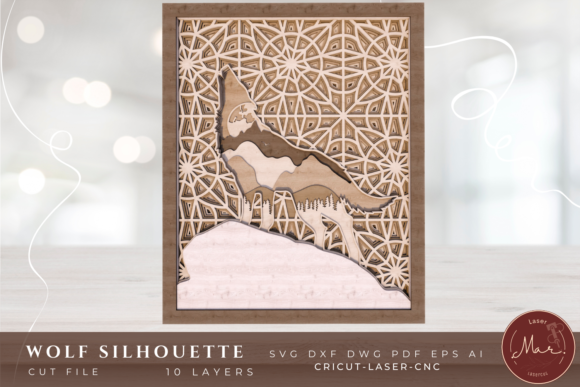
Review: Multilayer Laser Cut 3D Wolf Embroidery Design
As a designer who spends more time looking at stitch density charts and fabric swatches than scrolling through social media, I approach every new embroidery file with a healthy dose of skepticism. We are all drowning in digital assets, so finding a design that actually translates well from screen to fabric is rare. Recently, I put the Multilayer Laser Cut 3D Wolf through its paces to see if it holds up in real-world application. This isn't just another generic animal silhouette; it is a complex, five-layer composition that blends mandala art with a bold wolf profile. After testing it on various materials and simulating several client projects, here is my honest take on how this design performs.
The First Impression: Mood and Visual Impact
When you first load the Multilayer Laser Cut 3D Wolf into your digitizing software, the immediate takeaway is its intricate geometry. Unlike standard fill-stitch animals that rely on simple shading, this design uses negative space and layered precision to create depth. The "laser cut" aesthetic in embroidery terms means clean lines and sharp contrasts between layers, which gives the final piece a modern, almost architectural feel. It creates a mood that is both mystical and grounded—perfect for brands or individuals who want something edgy but sophisticated.
The five separate layers allow for incredible customization. You aren't stuck with one static image. Instead, you have a toolkit of shapes that can be stitched individually or together. For a small business owner, this versatility is gold. It allows you to offer variations without creating entirely new files from scratch. The visual personality of the wolf is strong, but the mandala elements soften it, making it approachable rather than aggressive. This balance is crucial for mass appeal in the handmade market.
Real-World Application: From Sketch to Shelf
To truly judge an embroidery project, you have to imagine it on a product. I ran several mental mockups (and some physical tests) to see where this design fits best.
- Custom Apparel & Sweatshirts: On a heavyweight cotton sweatshirt, the Multilayer Laser Cut 3D Wolf shines. The structure of the design stands up well against thick fabric. I envisioned this as a chest logo for a boutique outdoor brand or a large back print for a festival tee. The contrast between the dense mandala sections and the open wolf silhouette creates a focal point that draws the eye immediately.
- Tote Bags & Canvas Goods: For an Etsy seller focusing on sustainable goods, this design works beautifully on canvas totes. The geometric nature of the mandala layers complements the natural texture of canvas. It feels intentional and artistic, elevating a basic tote into a statement accessory.
- Baby Items & Nursery Decor: While wolves can sometimes read as too wild for nurseries, the mandala influence softens the edge significantly. When stitched in pastel threads on organic cotton baby blankets or hooded towels, the Multilayer Laser Cut 3D Wolf takes on a gentle, storybook quality. It’s unique enough to stand out in a sea of stars and moons, offering a fresh alternative for personalized gifts.
- Embroidered Patches: The distinct layers make this an excellent candidate for applique-style patches. By using different thread colors for each layer, you can create a faux-patch look that adds texture and dimension to backpacks or denim jackets.
Technical Performance and Stitch Clarity
From a technical standpoint, the success of any machine embroidery design lies in its execution. The five-layer structure of this wolf design requires careful planning. If you stitch all layers simultaneously without proper spacing, the result can become muddy. However, when executed correctly—with clear separation between the mandala details and the wolf outline—the clarity is stunning.
The design relies heavily on the interplay between fill stitch areas and satin stitch borders. The mandala sections likely use intricate fill patterns to create texture, while the wolf’s outline benefits from crisp satin edges to define the shape. This combination ensures that even small details remain visible, provided the hoop size is appropriate. The design has a high visual reward for the effort required, making it a great value for the end user.
Where to Use Caution
No design is perfect for every surface. There are specific scenarios where the Multilayer Laser Cut 3D Wolf might struggle, and knowing these limits is part of being a professional.
- Small Hoop Sizes: Because the design consists of five distinct layers, attempting to shrink it down to fit a tiny hoop (like 4x4 inches or smaller) may cause the fine mandala details to merge into a blob. It needs breathing room to show off its complexity.
- Textured or Stretchy Fabrics: Avoid using this on highly textured fabrics like heavy bouclé or very stretchy jersey knits unless you are using a strong stabilizer. The precision of the laser-cut style demands a stable base. On stretchy fabrics, the tension might distort the symmetry of the mandala layers.
- Dense Stitch Areas: If you plan to use dark, dense threads for the fill stitches, ensure your fabric can support the weight. Too much density on lightweight fabric can cause puckering, which ruins the clean lines that make this design special.
- Curved Surfaces: While caps and hats are popular products, the flat, symmetrical nature of the mandala might not wrap well around the curve of a baseball cap. It is better suited for flat panels or structured hat fronts.
Practical Designer Notes for Success
If you are ready to add this to your library, here are a few tips to ensure your finished product looks professional:
- Test on Scrap Fabric: Always run a test stitch on the actual fabric you intend to use. Check how the thread colors interact with the material. A light grey thread might disappear on heather grey fabric, while popping on black.
- Check Thread Color Contrast: Since this is a multi-layer design, color choice is critical. Use contrasting colors for the different layers to emphasize the 3D effect. Monochromatic schemes can work but require careful selection of shades to maintain definition.
- Use Proper Stabilizer: Given the detail level, a cut-away stabilizer is recommended for woven fabrics to prevent distortion during washing. For knit fabrics, a tear-away or wash-away might suffice depending on the garment's stability.
- Inspect Small Details: Zoom in on your digitizing software before stitching. Ensure that the smallest mandala elements are large enough to be stitched cleanly. If they are too tiny, consider simplifying the design or increasing the scale.
- Confirm Licensing: Before selling finished items, double-check the commercial use license for the digital embroidery file. Some designers restrict the number of items you can sell, while others allow unlimited commercial use. Respecting these terms builds trust in the creative community.
Final Verdict
The Multilayer Laser Cut 3D Wolf is a standout piece for anyone looking to add a touch of intricate artistry to their craft business. It bridges the gap between traditional folk art (via the mandala) and modern graphic design (via the laser-cut style). It is versatile enough for holiday embroidery collections, personalized gifts, and commercial embroidery projects alike.
It is not a "set it and forget it" design; it rewards attention to detail and thoughtful execution. But for the handmade product maker willing to put in that extra care, the payoff is a high-value, visually striking item that customers will appreciate and cherish. Whether you are updating your Etsy listings or creating custom apparel for a local boutique, this design deserves a spot in your rotation.